
 Taeki Chan
 Muar has always been one of those places that brings me back through food.
Having lived in Melaka before, I used to make trips over to Muar to enjoy some of its famous local delicacies. On this visit, I decided to revisit a few familiar favourites — from the fried oyster that I remembered from years ago, to the many varieties of otak-otak at Otak-Otak Cheng Boi, and finally, the legendary Tanjung Rojak by the Muar riverfront.
It was a delicious food hunt, although not every dish tasted exactly the way I remembered.
Revisiting a Fried Oyster From the Past
The first stop was the fried oyster that I had been looking forward to trying again.
When I was still living in Melaka, I used to come over to Muar partly because of this particular dish. Back then, I remember an uncle standing behind the wok, frying plate after plate of oyster omelette.
But times have changed.
This time, the wok was handled by two young ladies. Perhaps they are the uncle’s daughters, although I honestly have no idea. Still, seeing a new generation behind the wok made me wonder — would the fried oyster still taste the same as I remembered?
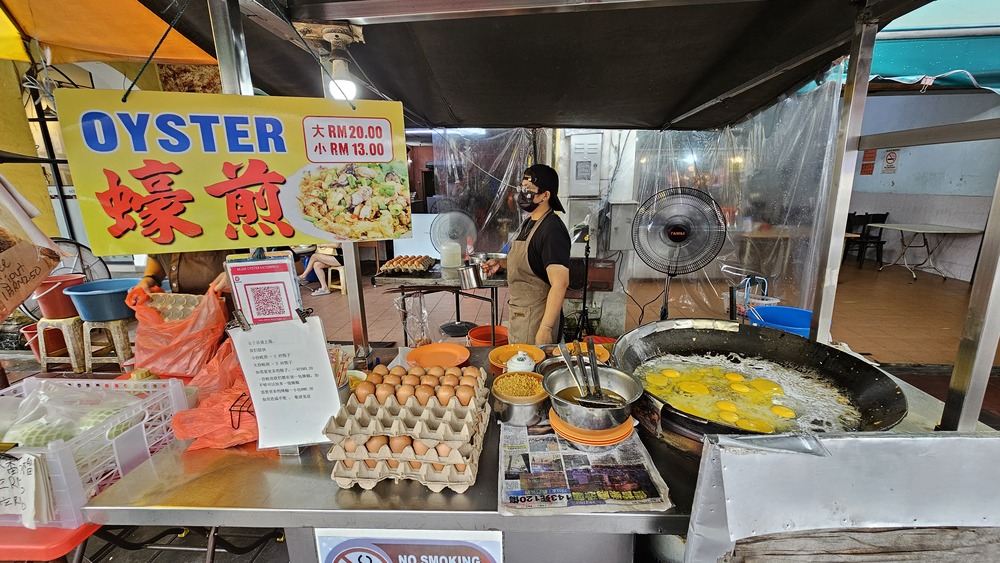
Of course, there was only one way to find out.
The dish is relatively simple, made by cooking a mixture of flour batter and eggs before adding fresh oysters. But simplicity is exactly why technique matters so much.
For me, the key to a really good fried oyster is wok hei.
That smoky, slightly charred fragrance created when ingredients are stir-fried over intense heat can completely transform a dish. The flour and eggs need to be cooked at the right temperature, while the oysters need to remain tender and fresh. Controlling the fire while constantly stir-frying everything is where the real skill lies.
At first glance, however, I was already a little worried.
The fried oyster looked quite pale and white, without much of that slightly darker, charred appearance that I associate with a good amount of wok hei.
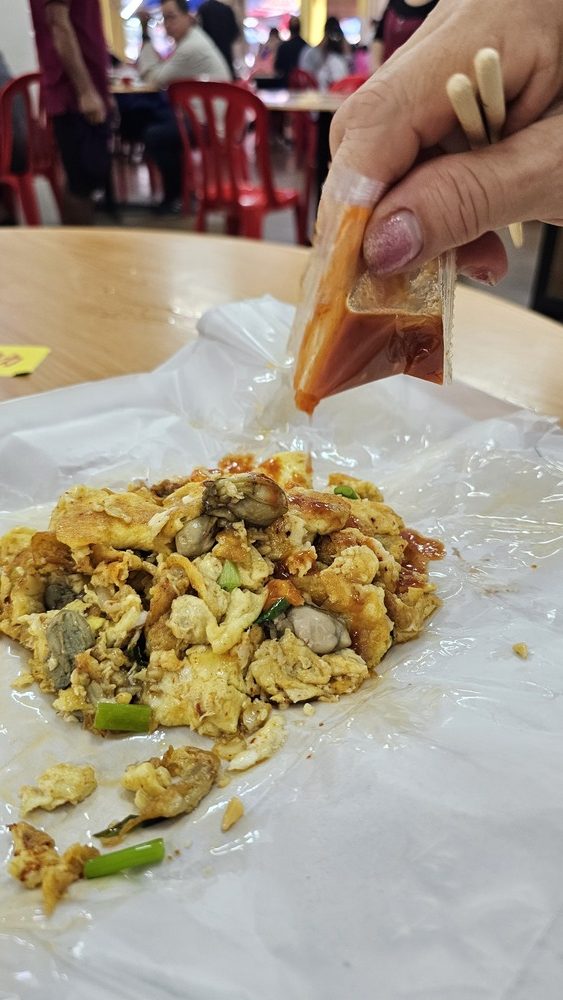
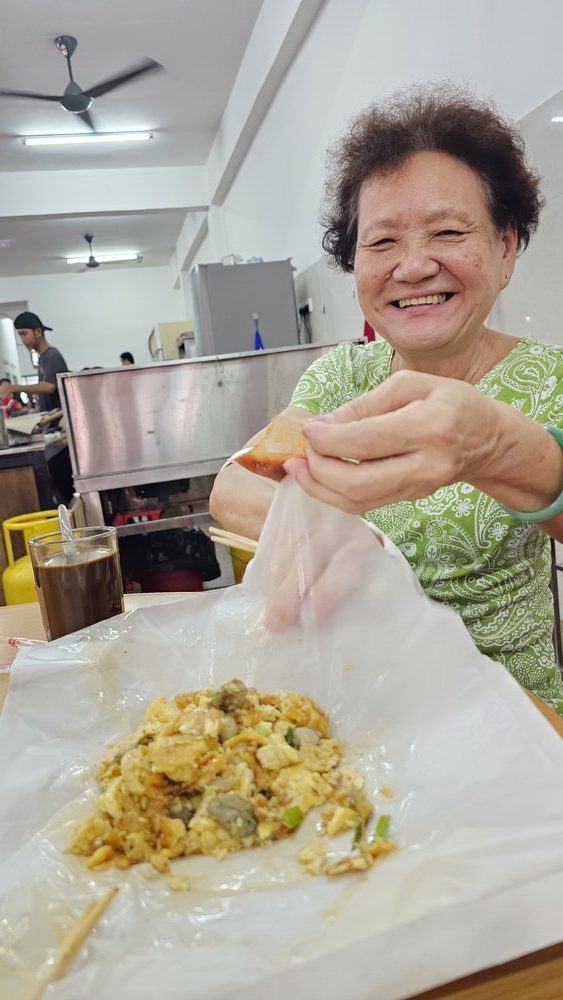
And unfortunately, after taking my first bite, my concern turned out to be justified.
It just didn’t taste like the fried oyster I remembered.
The smoky wok hei and the rich flavour that had made me come all the way to Muar in the past were no longer there. The dish wasn’t terrible, but compared to the version I remembered, it was quite disappointing.
Perhaps my memories have made the old version seem even better after all these years. Or perhaps the cooking style has genuinely changed.
Either way, this was one nostalgic food memory that didn’t quite live up to my expectations.

More Than Just Traditional Otak-Otak at Otak-Otak Cheng Boi
The next stop brought us to something that is much more traditionally associated with this part of Malaysia — otak-otak.
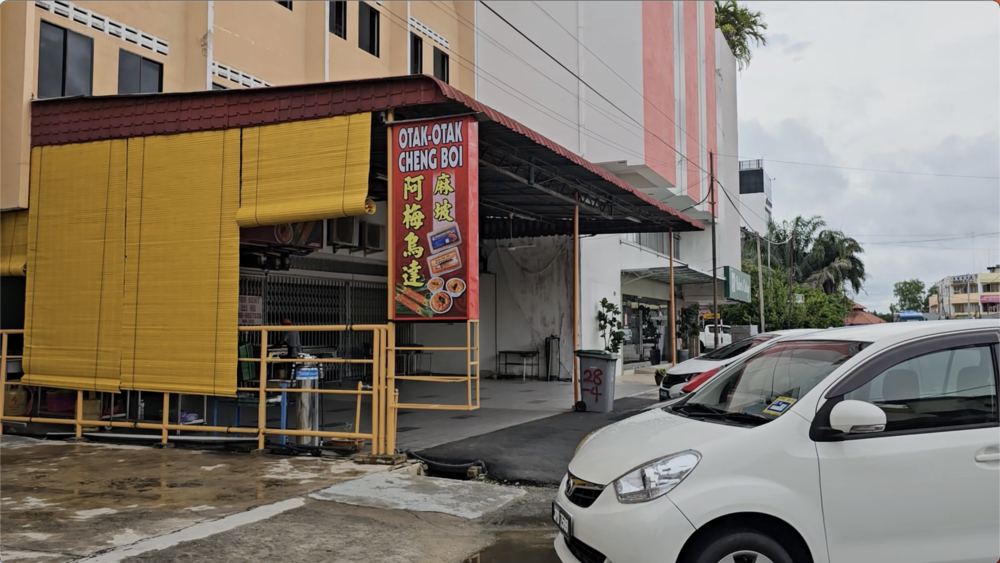
Otak-otak is a classic Southeast Asian fish cake made by combining fish with ingredients such as tapioca starch and a mixture of aromatic spices. Traditionally, the mixture is wrapped in banana leaves or nipa palm leaves before being grilled or steamed.
The leaves play an important role too, as they infuse the otak-otak with their distinctive fragrance during the cooking process.
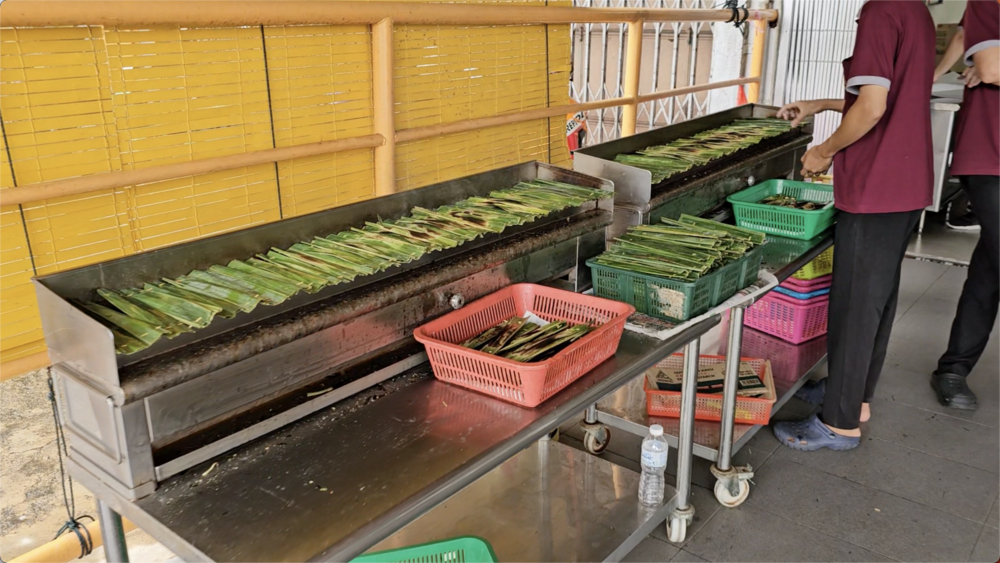
But at Otak-Otak Cheng Boi, there is much more to explore than just the traditional version wrapped in nipa palm leaves.
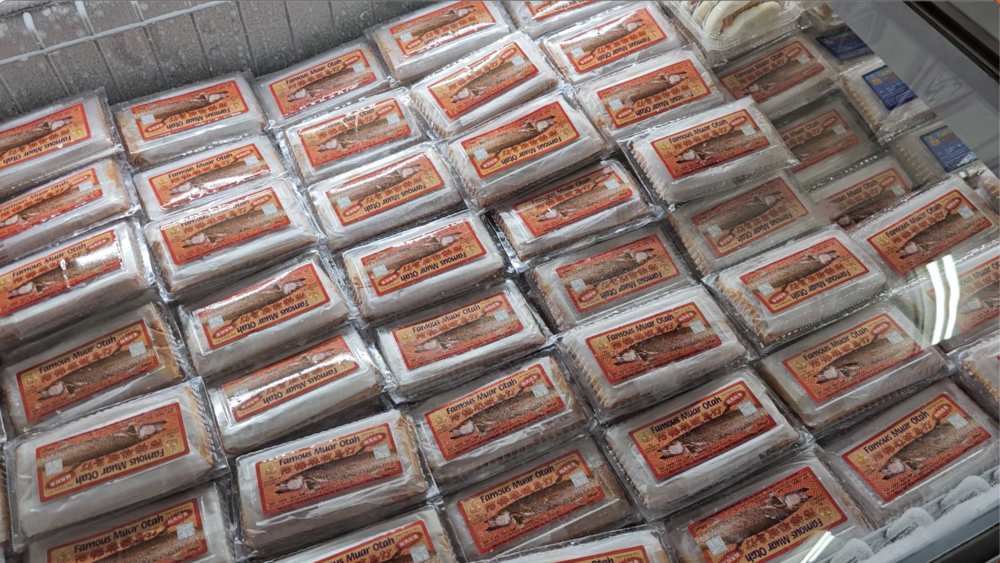
The shop also offers a wide range of frozen otak-otak in different flavours. Besides the usual fish version, there are varieties featuring ingredients such as prawn, crab and squid, along with many more options.
It is an interesting place for those who love otak-otak and want to try something beyond the traditional version. The frozen packs also make it easy to bring some home, especially if you are visiting Muar and want to take a little taste of the town with you.
The Legendary Tanjung Rojak
No food trip to Muar would feel complete without stopping for Tanjung Rojak.
Located at the Tanjung Emas Food Court along the scenic Muar riverfront, this decades-old rojak stall is one of the town’s most iconic local food experiences.
Rojak may look like a simple mixture of fruits, vegetables and crispy snacks, but the real magic is in the sauce.
Here, the ingredients are generously coated in a thick, dark and gooey petis, a rich shrimp paste-based sauce that brings together sweet, savoury and spicy flavours.
The rojak includes fresh and crunchy ingredients such as sengkuang, cucumber, pineapple and mango, along with crispy pieces of youtiao, or Chinese fried dough.
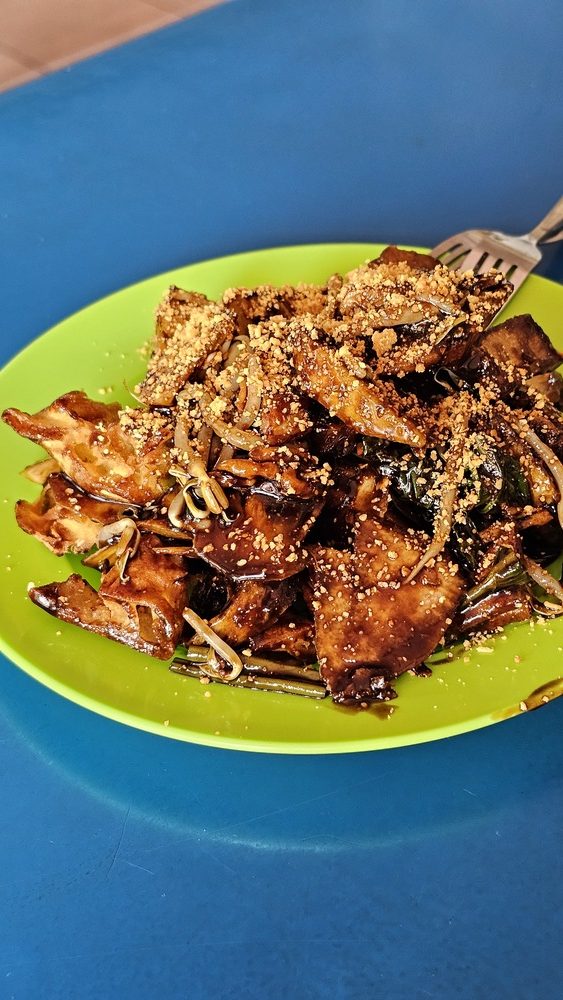
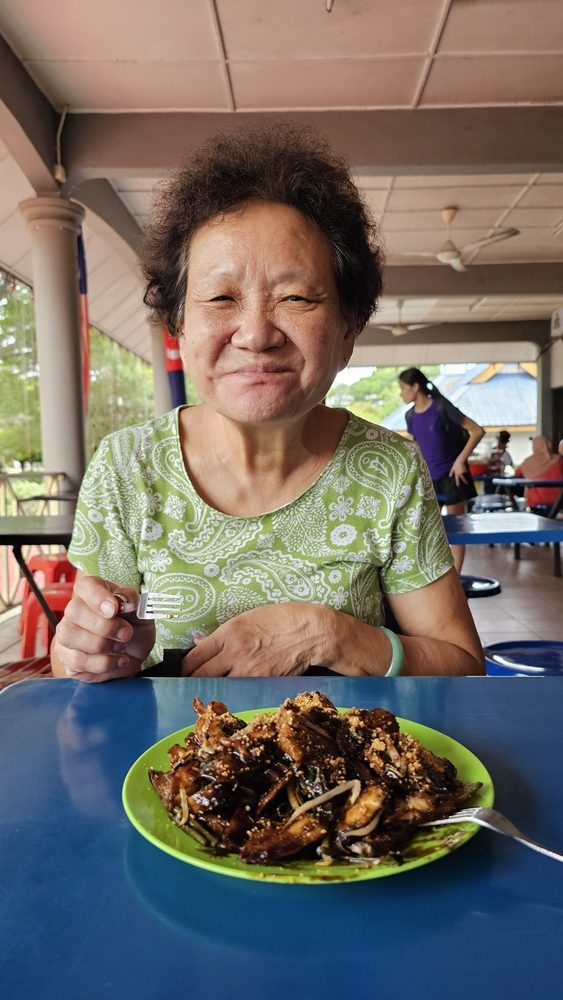
Each ingredient brings something different to the experience.
The fruits add freshness and a little sweetness. The cucumber and sengkuang provide a satisfying crunch. The youtiao adds another layer of texture, while the thick and sticky petis sauce brings everything together with its bold, savoury flavour.
And when you get a bite of everything at once, it is simply amazing.
It is one of those dishes that doesn’t need fancy presentation or expensive ingredients. The appeal comes from the balance of flavours and textures — fresh, crunchy, crispy, sweet, savoury and slightly spicy, all in one bowl.
A Food Trip Filled With Memories — and New Discoveries
This little food hunt around Muar turned out to be a mixture of nostalgia and discovery.
The fried oyster may not have tasted the way I remembered, and I have to admit that was a little disappointing. But food is often closely connected to memories, and sometimes revisiting an old favourite after many years can remind us that things do change.
Thankfully, there was still plenty to enjoy.
From exploring the different varieties of otak-otak at Otak-Otak Cheng Boi to enjoying the bold and addictive flavours of the legendary Tanjung Rojak, Muar once again proved that it has plenty to offer food lovers.
Sometimes a food trip isn’t just about finding the best dish.
It’s also about revisiting old memories, discovering what has changed and finding new reasons to fall in love with a place again.
And if you’re planning a trip to Muar, make sure you come with an empty stomach — because there is always something interesting waiting to be discovered.
My recommendation? Don’t miss the Tanjung Rojak. It is definitely one of the must-try foods when you’re in Muar!