


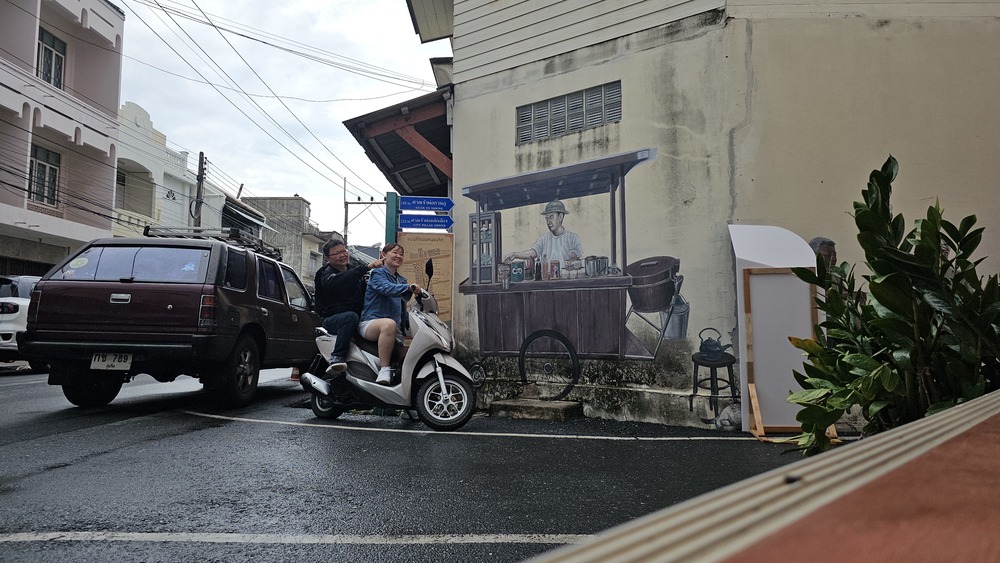
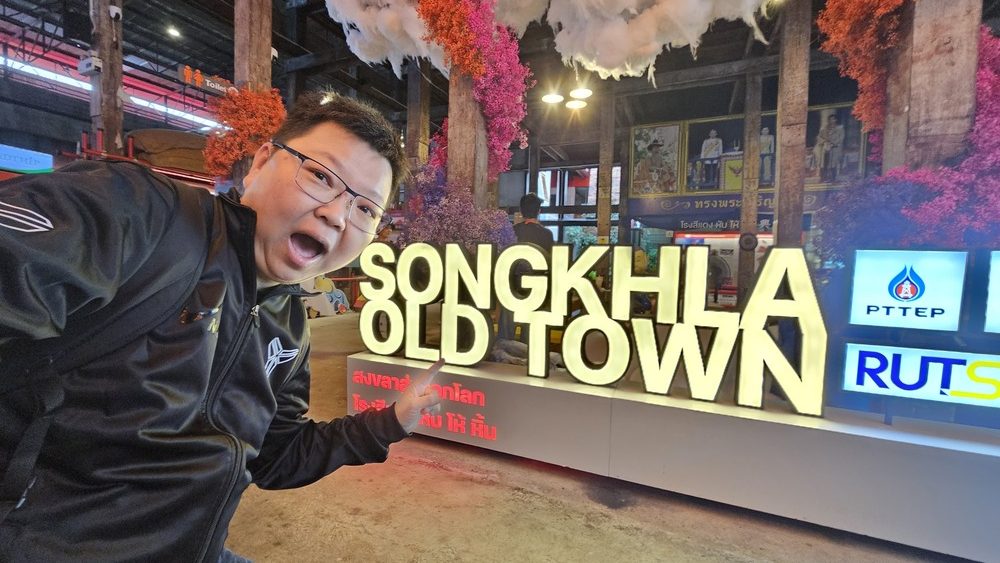
Songkhla is much more than just beautiful beaches and the famous mermaid statue at Samila Beach. After visiting Samila Beach, we decided to make a quick visit to Songkhla Old Town to see what this historic part of the city had to offer.
Songkhla Old Town has a history of more than 200 years and is centred around three historic streets — Nakhon Nok Road, Nakhon Nai Road and Nang Ngam Road. The area is particularly interesting because of its mixture of Chinese, Thai and European influences, reflecting Songkhla’s history as an important trading town.
So, let’s take a quick walk through some of the places we visited.

Nakhon Nai Museum
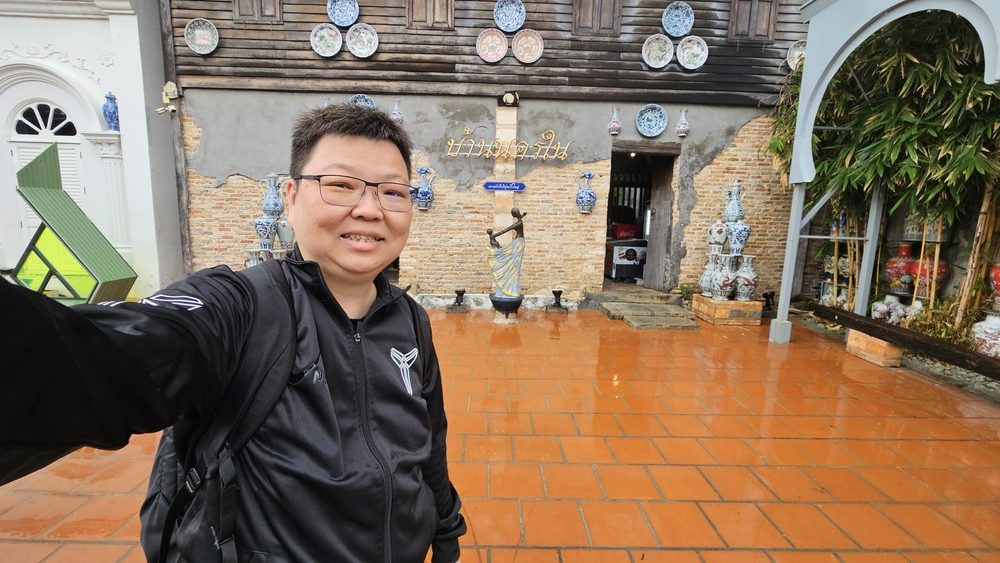
Our first stop was Nakhon Nai Museum, also known as Ban Nakhon Nai.
The museum is housed in a collection of old buildings that are believed to be more than 300 years old. What makes it particularly interesting is the combination of traditional Chinese architecture with Sino-European influences. The complex includes an old Chinese-style wooden house as well as a white Sino-European-style building.
The museum was established by Krachang Jaruphruekphan, a local businessman and collector who wanted to preserve Songkhla’s old buildings, history and way of life. Rather than allowing these historic structures and objects to disappear with time, he developed the site into a local museum where visitors can learn more about the heritage of old Songkhla.
Inside, visitors can find a fascinating collection of antiques, including old Chinese beds, wooden cabinets, tables, chairs, porcelain bowls and other household objects. These everyday items give us an idea of how people in Songkhla lived in the past.
For me, this was one of those places where the building itself is almost as interesting as what is displayed inside. Walking through the old house really gives you that feeling of stepping back in time.

Hub Ho Hin – The Red Rice Mill
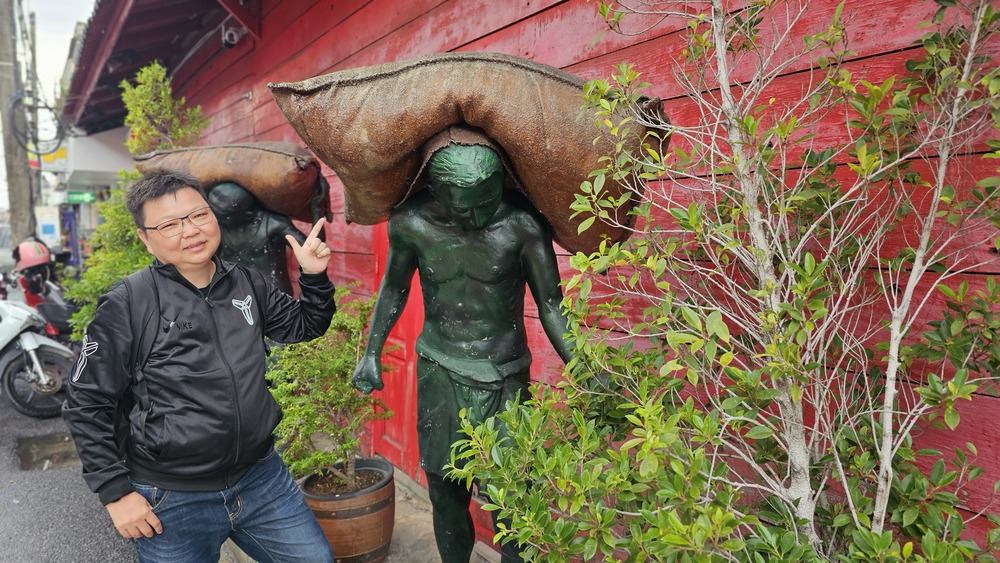
From Nakhon Nai, we continued our exploration of Songkhla Old Town and stopped at Hub Ho Hin, better known as the Red Rice Mill.
The bright red building is one of the most recognisable landmarks along Nakhon Nok Road, right beside Songkhla Lake. Nakhon Nok Road was historically an important area for trading and transporting goods, and Hub Ho Hin played an important role in Songkhla’s rice trade.
Hub Ho Hin was established in 1914 as a rice mill by Khun Rajkitjaree (Jun Liang Limsawaphruek). It began as a relatively small mill, but later expanded and became a major and modern rice-processing operation for its time. Machinery was brought in from Penang and later from Britain, while rice from farming areas around Songkhla Lake was processed here.
At its peak, the mill operated around the clock with workers working in shifts. The rice processed here was supplied to Songkhla and nearby areas, and was also traded with places in neighbouring Malaysia, including Perak and Ipoh.
The name Hub Ho Hin comes from Hokkien and is associated with ideas of integrity, cooperation and prosperity. The building’s red colour is also the reason locals came to know it simply as the “Red Rice Mill.”
Over time, the rice-milling business declined and the building was later used for other purposes, including storage and activities connected with the area’s trading economy. Today, the historic building has taken on a new role as a place for heritage and cultural learning.
Standing in front of this huge red building, it’s quite fascinating to think that this was once a busy centre of Songkhla’s rice trade.
A Sweet Stop at Ice Cream Jar
Of course, no visit to Songkhla Old Town would be complete without trying some local food.
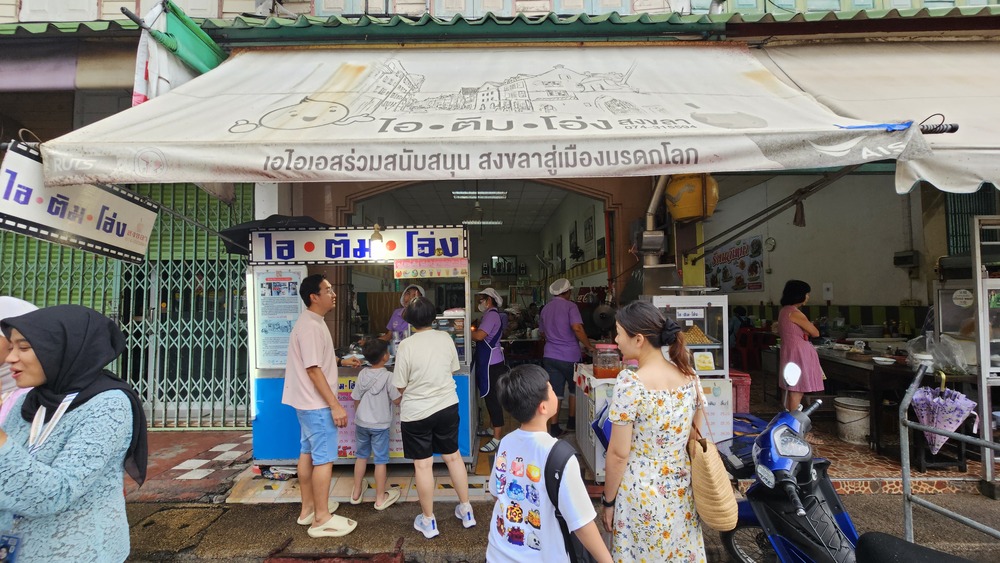
We stopped at the famous Ice Cream Jar, also known as Ong Ice Cream, on Nang Ngam Road.
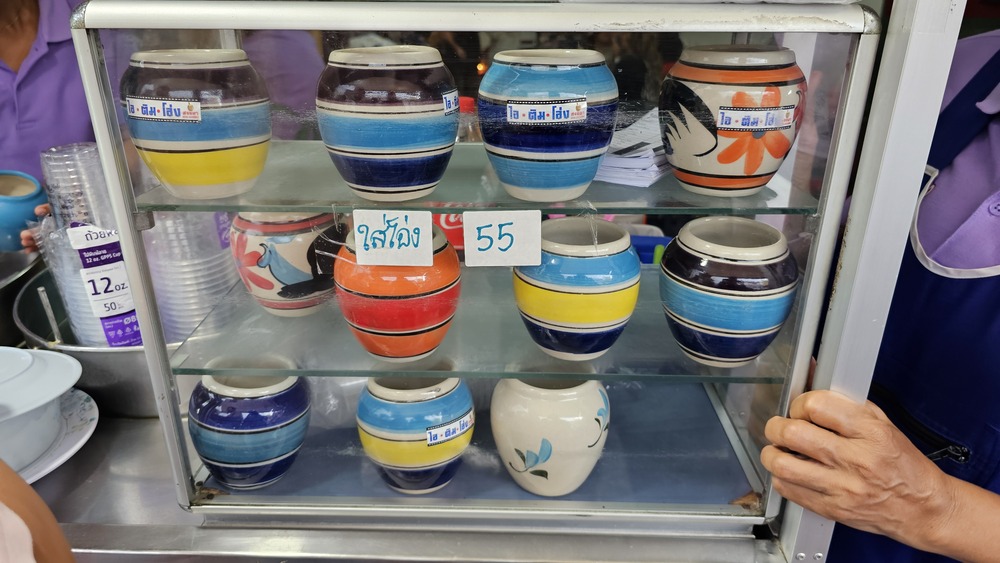
Unlike an ordinary ice cream shop, this place is known for serving its traditional ice cream in small decorative jars — and that’s where its name and distinctive character come from.
The shop has reportedly been around for more than 70 years. The story of its recipe goes back to an old ice-cream seller known as Ko Tong, with the traditional recipe later being developed and refined by the current owner, Mr Sawet.
One of the signature flavours is the traditional coconut-milk ice cream, which can be served with various toppings. A particularly unusual local-style combination includes egg yolk, with some versions also topped with Ovaltine powder.
But what really makes the shop memorable is the presentation. Instead of simply serving the ice cream in a normal cup, it comes in a small jar with a cute traditional design. The jar has become part of the shop’s identity and is one of the reasons this humble dessert has become associated with Songkhla Old Town.
It may be a simple dessert, but that’s part of the charm. Like many of the old shops around Songkhla Old Town, it carries a little piece of the area’s history and everyday culture.
A Quick Visit, But Plenty of History
Our visit to Songkhla Old Town was relatively quick, but even within a short time, we discovered quite a lot.
From the preserved homes and antiques at Nakhon Nai Museum, to the striking red walls of Hub Ho Hin, and finally a traditional bowl — or rather, jar — of ice cream, each stop offered a different glimpse into Songkhla’s past.
What I enjoyed most is that the old town doesn’t feel like a place where history is simply displayed behind glass. The old buildings, shops, food and streets are still part of everyday life.
And that’s what makes exploring Songkhla Old Town so interesting — you aren’t just visiting history; you’re walking through it.
So that’s all for my sharing on Songkhla Old Town. I hope you enjoyed coming along with me, and perhaps this little visit has given you another reason to explore Songkhla beyond Samila Beach.
Thanks for reading, and I’ll see you in my next travel story!